
Remnant decision
Turn a Carpet Remnant Into a Custom Rug
A carpet remnant can become a custom rug if its condition and usable width and length suit the size you want. We confirm that before cutting and binding the exposed edge.
Editorial guide by DMV Stair Runners · Published · Updated
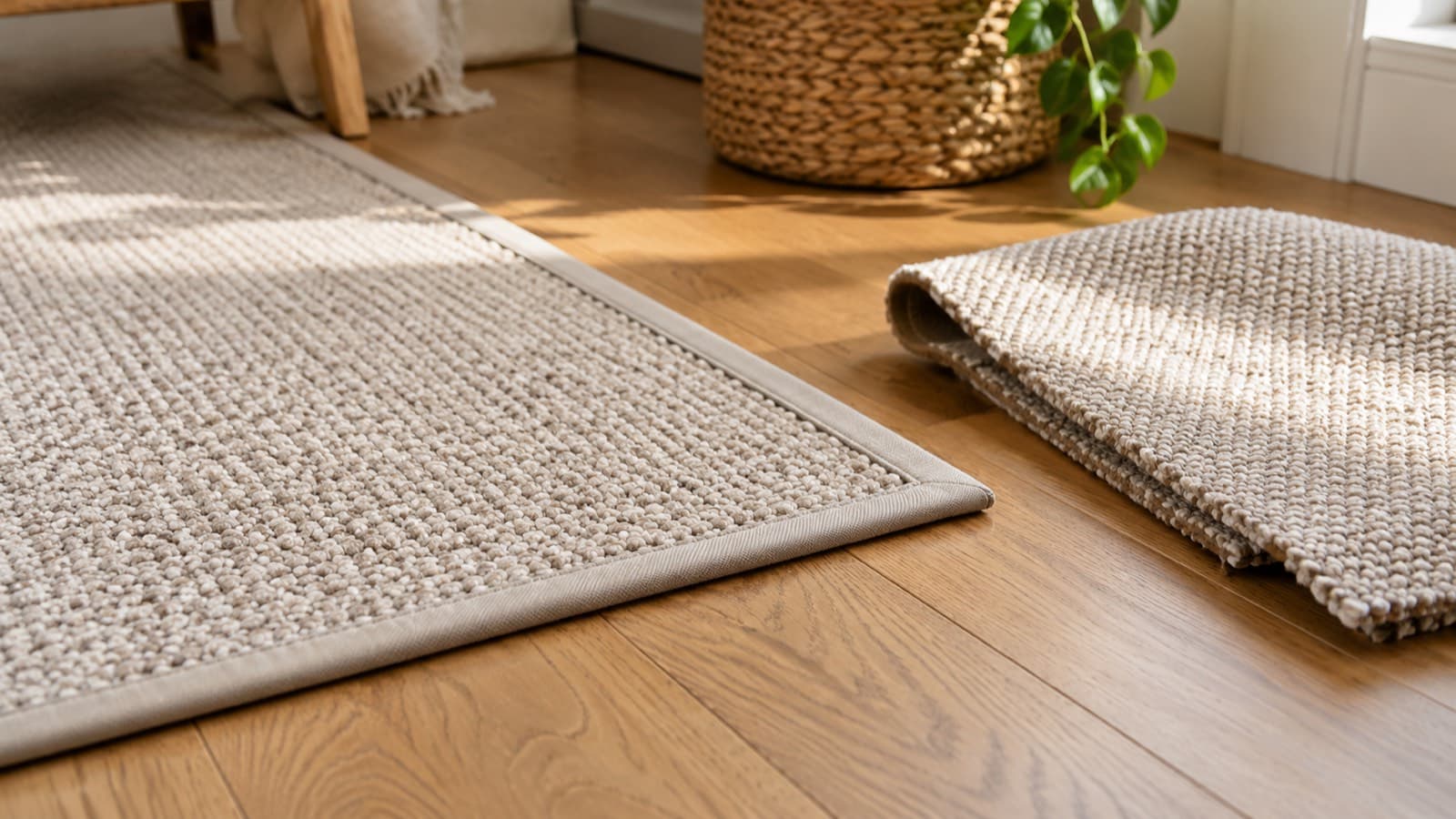
Check the material, size, shape, and binding finish
We first check whether the remnant can make the rug you want:
- Material: Whether the remnant is suitable for the project.
- Finished size: The dimensions that can be cut from the usable piece.
- Shape: Whether the work needs straight cutting or substantial shaping.
- Binding finish: The finish around the exposed edge.
The worked examples in Shaw’s Cut-A-Rug training account for width, length, and pattern direction. A piece may have enough total carpet area but be too narrow for the rectangle you want. Turning that rectangle to fit also changes which way the pattern runs on the rug.
For planning, note the piece’s usable width and length alongside your desired finished rug dimensions. Include which way any pattern runs on the carpet and how you want it to run on the finished rug.
Step 1
Review the remnant
We check the carpet type and condition, then measure the usable width and length for the rug you want.
Step 2
Confirm the plan
Confirm the finished rug dimensions and binding finish.
Step 3
Cut the piece
Straight cutting is included in standard binding, while substantial shaping is separate.
Step 4
Bind the exposed edge
Bind the exposed edge.
Custom does not automatically mean cheaper
The binding estimate uses the rug perimeter. Compare that estimate with the ready made rug you are considering. The local minimum applies.
After the material and scope are reviewed, drop-off and pickup can be arranged.
Measure the perimeter for a binding estimate.Use the binding calculator.