Custom rug planning
Do You Need a Pad Under a Custom Area Rug?
A pad is worth considering if your rug needs more grip, extra cushioning, or a layer between its backing and the floor. Whether it needs a separate pad depends on the rug’s backing, your floor’s requirements, and how you plan to use it. A custom size alone does not decide the answer.
Editorial guide by DMV Stair Runners · Published · Updated
Match the pad to the rug and floor
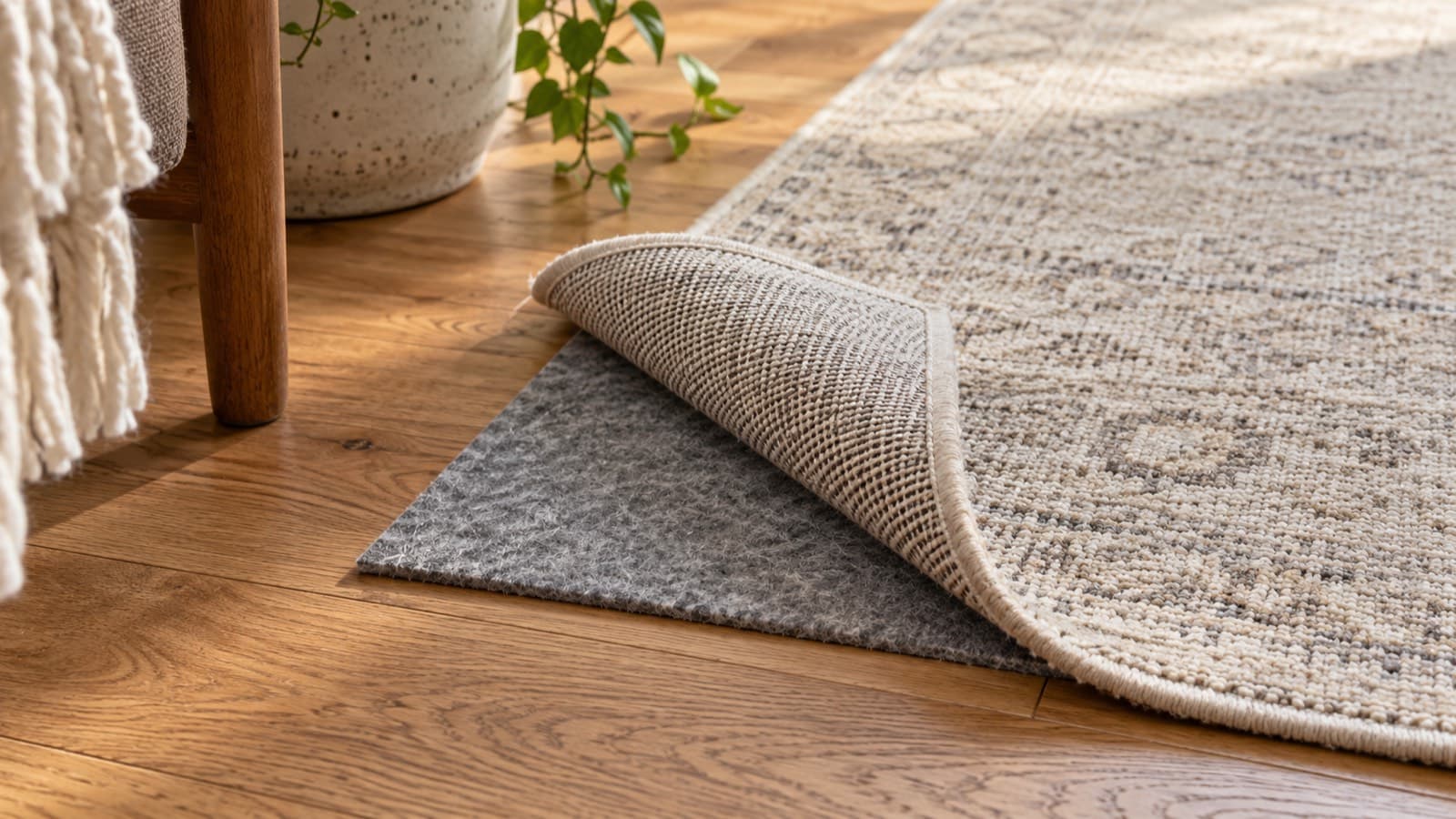
Start with what you want the pad to do. Mohawk Home describes three jobs for its rug pads: grip to help the rug stay in place, cushioning to change how it feels underfoot, and separation between rough backing and the floor. That guidance applies to its products; it does not mean every pad provides the same benefits or suits every floor. A thicker pad is not automatically the right choice.
Check the floor maker’s instructions before choosing. For example, Shaw’s luxury-vinyl care guidance warns against latex or rubber-backed mats because they can cause discoloration. That specific restriction shows why a general recommendation for “hard floors” is not enough to confirm compatibility with your floor’s finish or product.
If the floor is hardwood, check its finish first
Identify the actual hardwood floor and finish, then read the floor maker's written restrictions. Compare those with the material and use instructions for the specific pad you are considering. A broad ‘hardwood safe’ label cannot settle compatibility with every finish.
The NWFA Wood Flooring Installation Guidelines, revised 2025 warn that some nonskid pads can imprint a wood finish. They do not approve a pad for your floor. If the floor or pad instructions are missing or conflict, pause the choice and ask the makers or project reviewer before placing it.
Once compatibility is clear, fit the pad inside the finished rug and test whether the rug and pad together let nearby doors open.
Fit the finished rug and check the door
The pad should sit inside the finished rug’s edges. Confirm the cut against the exact pad’s instructions and the rug’s finished dimensions, rather than using a universal trim allowance.
Mohawk Home’s sizing pages agree that the pad belongs within the rug edge, but their trim allowances differ. If the instructions you find conflict, ask for clarification before cutting.
Also check the combined height of the rug and pad wherever a door needs to open over them. Extra cushion is only useful if the finished combination fits the space.
Include the pad in the rug plan
Binding finishes the carpet’s exposed edge. A pad is a separate layer underneath the rug, so it does not replace binding. Include both decisions when planning the finished piece.
DMV Stair Runners offers a non-slip-pad option within its custom-rug work. Bring the floor details and your rug plans into the project review so the rug, floor, and pad can be considered together. Final material, dimensions, and scope follow that review.