
Stair runner design
How to Choose a Stair Runner Design for Your Stairs
Start with real carpet samples against your own stairs. Compare a quieter texture with a stronger pattern, look at the visible stair edges, then check what happens at turns or landings before settling on a design.
Editorial guide by DMV Stair Runners · Published · Updated
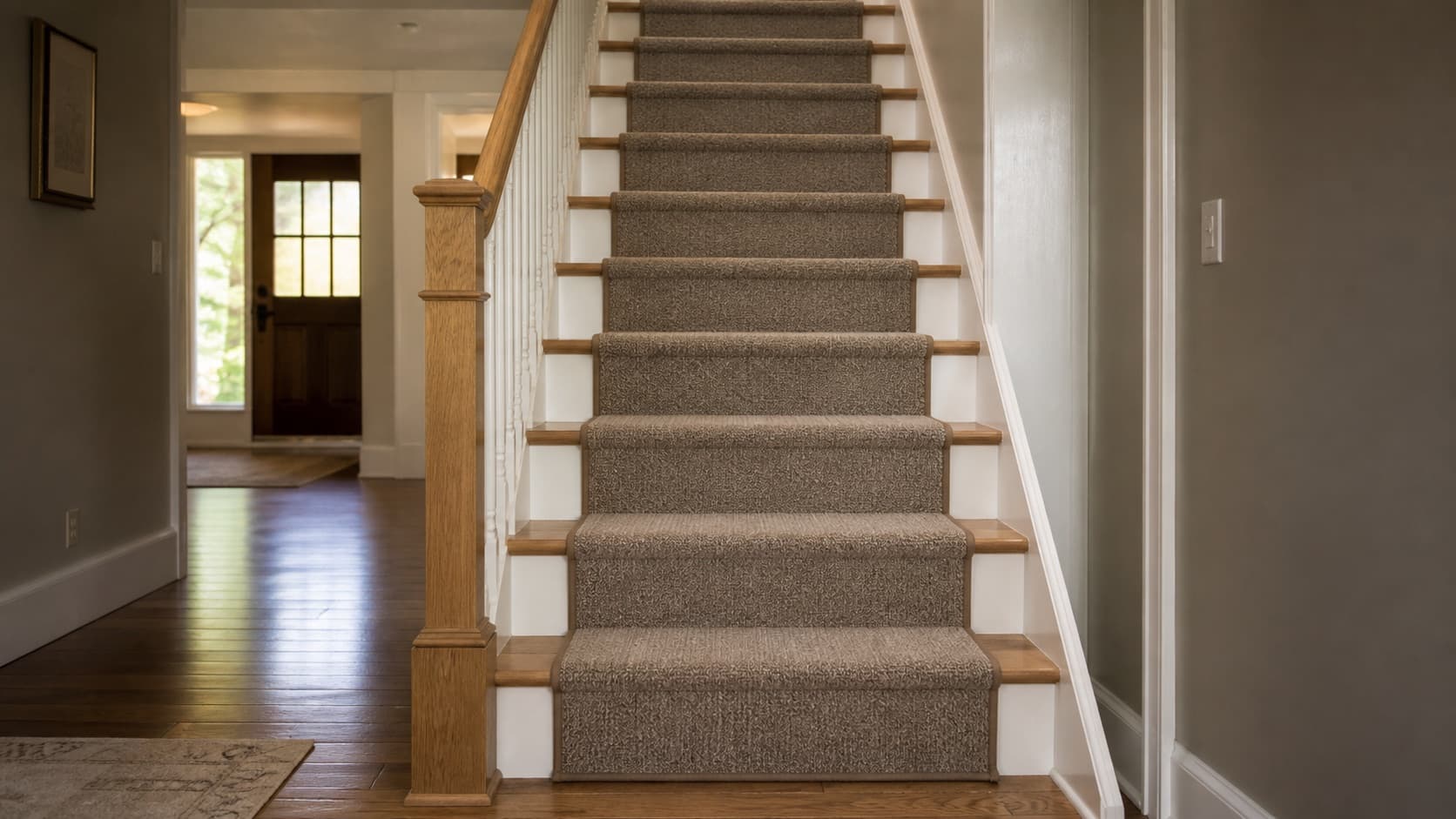
Quiet texture or stronger pattern?
Hold two physical samples on the stairs and look from both the top and bottom. A quieter texture may let the stair shape lead; a stronger pattern will draw more attention to the runner. The exact color and surface may look different in your home's light than on a screen.
How much stair edge do you want to see?
Mark a provisional runner width with painter's tape so you can compare the exposed stair edges from normal viewing spots. This is a visual choice for now; the finished width depends on the actual staircase and selected material.
What happens at a turn or landing?
Look at the sample's direction as the staircase changes. A strong repeated motif may read differently at a landing or pie-shaped step. The home measure and material review settle how the chosen carpet can be used; a screen illustration cannot establish the cut or pattern placement.
Use the sample visit to settle the choice
DMV Stair Runners brings physical sample books to your home and measures the staircase. Compare the actual samples in the room, then ask which material and layout fit the full project before the final quote is confirmed.
See how the physical sample visit works.Explore the custom stair runner service and rough calculator.